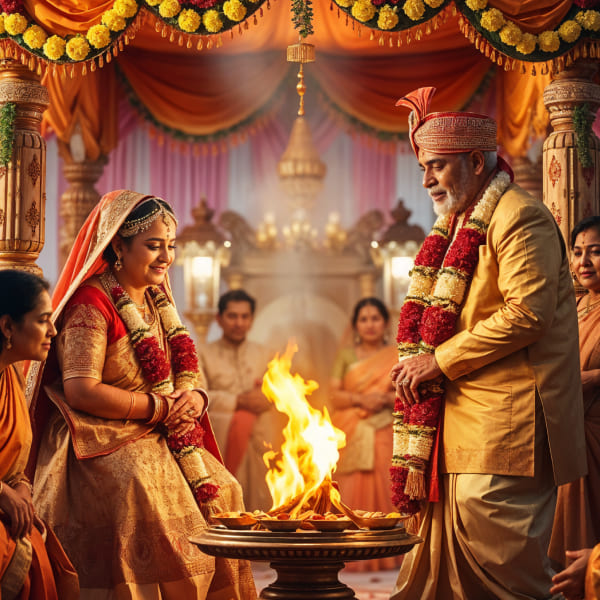


Sashtipoorthi (60’th Birthday)
 1520 Ratings & 185 Reviews
Send Your Enquiry
Description
Sashtipoorthi is also called Ugra Ratha Shanthi by some legends.
“Janmaabde, Janmamaasecha Swajanmadivase tathaa Janmarshe chaiva kartavyaa shanti rugrarathaahvayaa Devaalaye nadeeteere swagruhe vaa shubhasthale.”
According to the above mantra, the Sashtipoorthi ceremony can be performed in the year, month, and day the person turns 60. If this is not feasible, the ceremony can be conducted on any auspicious day as per the birth chart during the year prior to turning 60.
Rituals Involved in Sashtipoorthi Ceremony
The Sashtipoorthi ceremony starts with pre-rituals, which include a bath, Sandhya Vandhanam, and Anukja (permission to start).
Ganapathi puja is conducted prior to the ritual.
Sankalpam: The couple prays for health, wish fulfillment, sin removal, and favorable planetary afflictions.
Along with Sankalpam, Graha Preethi Dhana and Vaishna Sradham are performed to appease the planets and seek the blessings of ancestors.
Abyuthaya Sradham and Nandee Sradham are performed to invoke the spirit of ancestors and attract their blessings for the well-being of the living family members.
The cleansing ritual Punyaham is performed to sanctify the venue, which increases the auspiciousness of the ceremony.
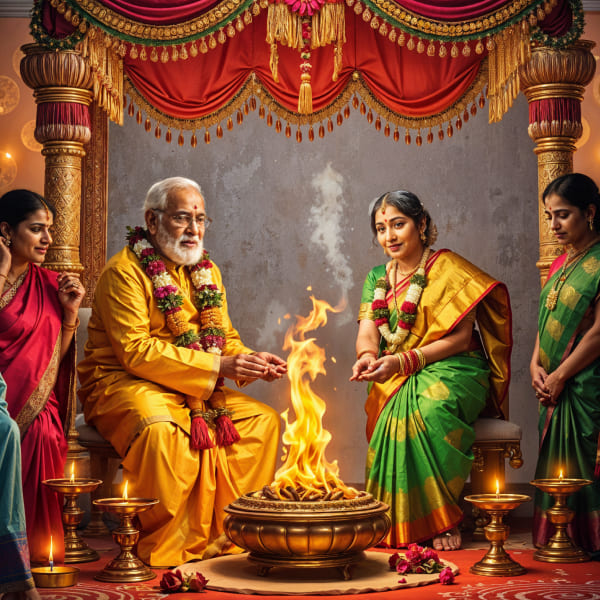
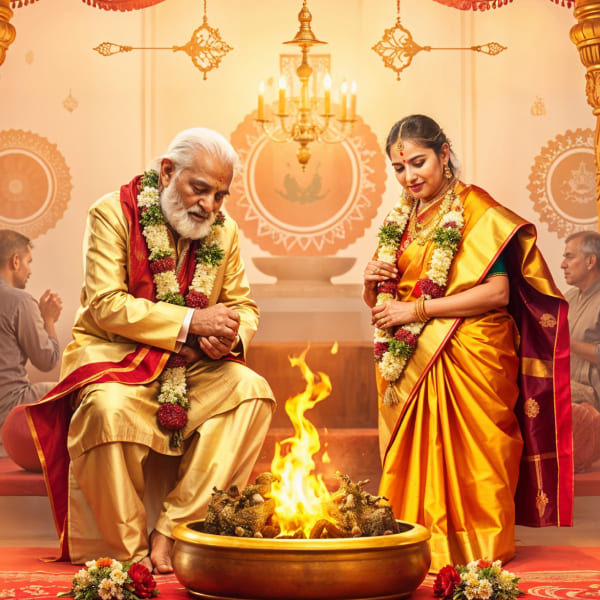
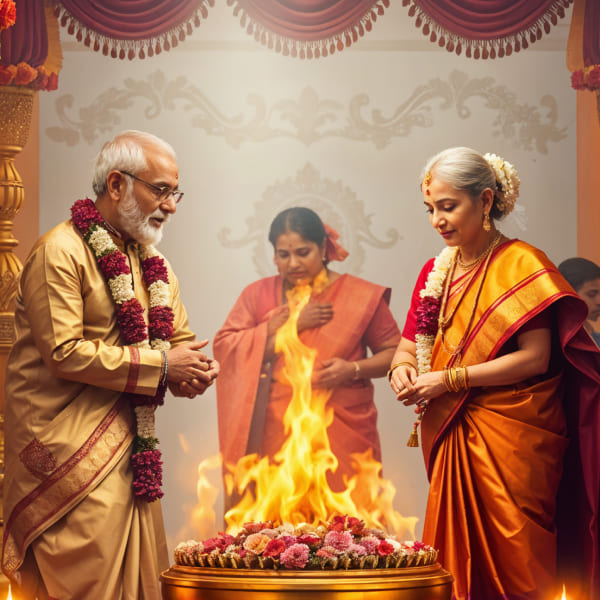
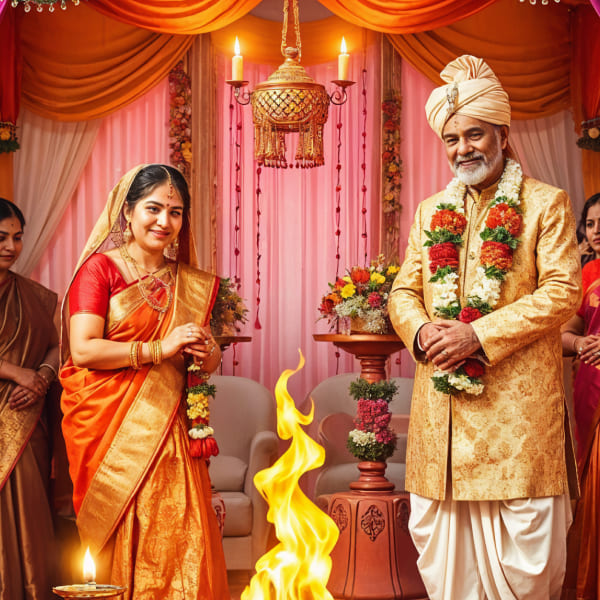
During the ceremony, the couple celebrating the Sashtipoorthi takes their marriage vows and performs a garland exchange akin to their wedding ceremony. The male partner performs the Mangalya Dharanam (Tying the Mangalyam) and takes Manthra Snanam with the water blessed with udhaka sayana manthras.
Kalasha Sthapana and Kalasha Pooja
On the occasion of the ceremony, Mrityunjayadevata Kalasa Sthapana and Pratima Sthapana are conducted, which involve preparing a Kalasham (sacred pot) and installing deity idols.
The procedure of Kalasa Sthapanam varies by place and community. The primal difference is the number of Kalashas used in the ritual, ranging from 60, 33, or 12. Shodasa Upachara Pooja is also performed to invoke the divine energies of deities.
Puja Rituals
Various puja rituals are conducted in Shastipoorthi ceremony which includes
- Paratpara Puja – The worship of Gowri (Ma Durga) and lord Vishnu.
- Puja for Samvathsara devatas (The gods of the sixty Tamil/Sanskrit years).
- Puja for Nakshathra devatas (Birth star gods)
- Puja for Thithi Devatas (Gods of the phases of the Moon) and Dikpalakas (The gods for the eight cardinal directions).
Mantras such as Varuna Sookhtha, Purusha Sooktha, Nakshatra Sookhta and Dik Palaka Mantras are chanted and this segment of the ritual concludes with Dosha Shaanthi.
Homas
Powerful Homas or fire rituals are conducted in the ritual to receive the blessings of the different deities. These are,
- Ayush Homam – For longevity, the homam is dedicated to Ayur Devatha.
- Navagraha Homam – for appeasing nine planets and attracting favorable planetary afflictions.
- Dhanvantari Homam – For health and mental well-being.
- Maha Mruthyunjaya Homa – For longevity and to overcome premature death.
After the homa rituals, Mangala Snana or ceremonial bath is conducted to the couple using 11 sacred dravyas, which are Gorochanam, Curd, Ghee, Durva grass, Cow’s Milk, Fruits, Flowers, Mirror, Deepam, Mud, and Gold. This brings well-being, long life, peace, and wealth to the couple.
Dhanam Rituals in Shastipoorthi
Dasa Dhanam
The couple performs the various types of Dhanas to attract blessings and ensure prosperity. These include Cow (Gho) dhana, Gold dhana, Boohoo dhana, Vasthra dhana, Jaggery dhana, Lavana dhana, Food dhana, Silver dhana, Ghee dhana, and Sesame dhana.
Panch Dhana
Pancha dhana involves offerings of a religious book, Vastram, Deepam (Lamp), Udhaka Kumba (Water in a copper/brass vessel), and Bell
Phala Dhana
The ceremony concludes with Phala Dhana, Offerings of fruits to all the participants of the ceremony.
Along with Phala Dhana, Bhoori Dakshina, Maha Ashirvadam, Brahmana Bhojanam, and Swasthi Vachanam are performed to seek blessings from elders and scholars present in the ceremony.
Benefits
- Cultural and Spiritual Milestone: The completion of 60 years is a monumental event that is steeped in tradition and spiritual meaning.
- Renewal of Life: It symbolizes the beginning of the second phase of life, where one transitions from the materialistic to the more spiritual aspect of life.
- Blessings for Longevity and Health: Sashtipoorthi rituals are performed to bless the person with good health, peace, and prosperity for years to come.
Our Promise :
- Certified and experienced Patashala priests.
- All rituals follow Vedic Standards and Procedures.
- On-time availability of pandits on the scheduled date.
- Sacred homa materials for the best outcomes.
- Powerful mantras as per the Vedic standards.
- In-house guidance team till the Ceremony completion.